7 Best Ways to Fund Sprinter Vans for Business
Compare the best ways to fund sprinter vans, from loans and leases to vendor programs, while protecting working capital and matching terms to use well.

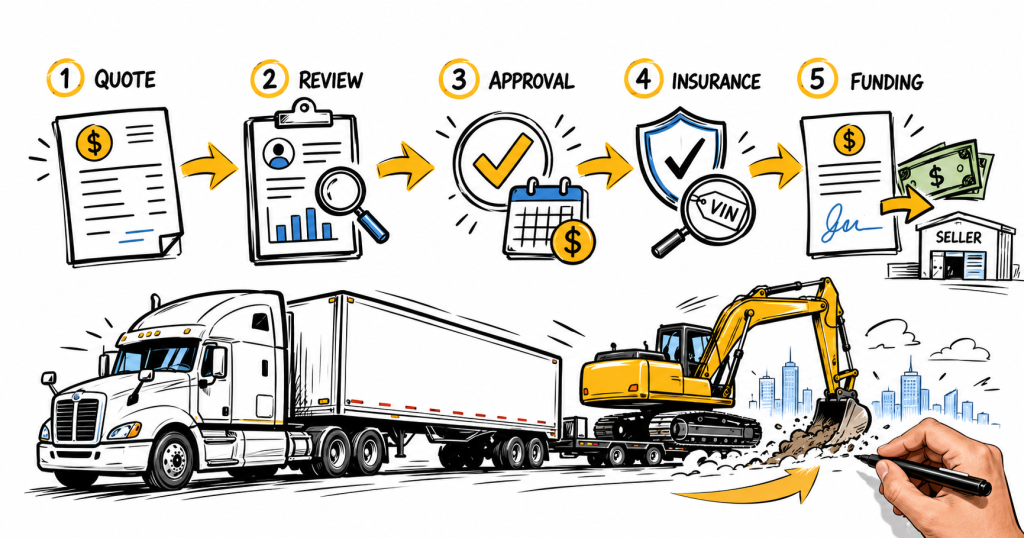
A truck that is parked for repairs, an excavator that cannot keep up with production, or a trailer fleet that no longer matches customer demand can become an operating problem quickly. The equipment finance process is how an established business turns that need into an asset that can go to work, while protecting cash flow and keeping the transaction aligned with lender and vendor requirements.
For fleet and equipment-dependent businesses, financing is not simply a matter of filling out an application. The asset, seller, borrower profile, requested structure, and delivery schedule all affect the path from quote to funding. Knowing what happens at each stage helps ownership, finance teams, and operations leaders avoid preventable delays.
The strongest transactions begin with a clear equipment plan. Before requesting financing, identify the asset being purchased, its purchase price, condition, year, mileage or hours, seller, expected delivery date, and business purpose. A lender will view a 2025 highway tractor purchased from an established dealer differently from a 12-year-old rollback bought through a private seller. Both may be financeable in the right situation, but asset age, collateral value, and documentation expectations can vary.
The intended use matters as much as the equipment itself. A dump truck added to a contractor’s existing fleet to support awarded work has a different operating story than a specialty vehicle entering a new line of business. Be prepared to explain whether the asset replaces an aging unit, expands capacity, reduces downtime, supports a contract, or improves utilization.
A detailed vendor quote is usually the starting document. It should clearly show the buyer and seller, equipment description, serial or VIN when available, sale price, taxes and fees, deposits, trade allowances, and any add-on equipment. If the purchase includes body work, a liftgate, hydraulic system, or other upfit, the quote should separate those costs where possible.
The application and credit review establish whether the proposed transaction fits available financing programs. For established businesses, the review often considers time in business, business and personal credit strength, annual revenue, existing debt, payment history, fleet or equipment experience, and the amount being financed relative to the company’s size.
Documentation needs depend on the request. A well-established company with strong credit seeking a late-model tractor or standard construction asset may qualify through a more streamlined process. A larger request, a specialized asset, an older unit, a private-party sale, or a more complex ownership structure may require additional financial statements, tax returns, bank statements, equipment schedules, or proof of insurance.
This is also the time to disclose relevant facts early. If a truck has high mileage, a seller is an individual, the equipment is titled in another state, or delivery depends on a future upfit, raising the issue at submission is better than discovering it after approval. Good deal structure does not mean avoiding lender questions. It means answering them before they become a funding obstacle.
Equipment financing can be structured in several ways. The appropriate option depends on the business’s cash position, how long it expects to keep the asset, the equipment’s useful life, tax and accounting treatment, and the lender programs available for that transaction.
An equipment loan generally gives the business ownership of the asset, with the equipment serving as collateral. A finance lease may offer another path to ownership, while a true lease may suit companies that want a lower payment structure or expect to refresh equipment on a regular cycle. The names can sound similar, but the end-of-term obligations, residual assumptions, payment levels, and ownership options differ.
Down payment is another structuring decision, not just a negotiation point. A larger down payment can reduce the amount financed and may improve lender comfort, particularly with older equipment or a higher-risk collateral profile. However, preserving working capital may be more valuable than minimizing the payment if the business needs cash for payroll, fuel, insurance, repairs, or a new contract ramp-up. Qualified borrowers may have low-down-payment or, in some cases, zero-down options, but availability depends on credit, asset type, time in business, financial profile, and the full deal structure.
Term length should match both the asset and the operating plan. Stretching payments over a longer term can improve monthly cash flow, but it may increase total financing cost and leave the company owing more than the equipment is worth if replacement comes sooner than expected. A shorter term builds equity more quickly but creates a higher monthly obligation. For revenue-producing assets, the question is whether the payment fits realistic utilization, not just whether it fits a spreadsheet.
Many approvals are conditional, meaning the lender has indicated it can proceed if specified requirements are met. Conditions may include a signed vendor invoice, proof of insurance, verification of bank information, a lien search, business formation documents, financial statements, or clarification of the equipment’s condition and value.
A conditional approval is meaningful progress, but it is not the same as funded. The final documentation must match the approved structure and the vendor paperwork. Small inconsistencies can slow closing: a different legal business name on the invoice, a VIN that does not match the insurance binder, a changed purchase price, or an unsigned delivery document.
This stage is where an experienced equipment finance broker can add practical value. Commercial Fleet Financing works with multiple funding sources and helps qualified businesses organize lender-required documents, coordinate with vendors, and address transaction details that can otherwise delay funding. The goal is not to force every deal into one program. It is to identify a workable financing path based on the borrower, asset, and seller.
Before funds are released, the lender may need to verify the equipment and seller. Deal requirements often depend on whether the seller is a franchised dealer, independent dealer, manufacturer, auction, or private party. Private-party transactions can require more diligence because title status, payoff information, ownership verification, and equipment condition may be less standardized.
For titled commercial vehicles, lien and title instructions need to be correct before payment is sent. For construction and industrial equipment, serial numbers, hours, condition reports, and proof that the seller has clear authority to sell may be relevant. If equipment has a prior lien, the payoff process must be coordinated so the new lender receives its required security interest.
Insurance is another common requirement. The policy generally needs physical damage coverage for the financed asset, with the lender shown as loss payee or additional insured as required. Do not wait until delivery day to involve the insurance agent. Specialty tow units, ambulances, cranes, and certain vocational assets can take longer to insure because of their use, value, or modifications.
Once conditions are satisfied, the borrower signs the financing documents. These may include the note or lease agreement, security agreement, guaranty, delivery acceptance, insurance authorization, and state-specific title or tax forms. Review the documents carefully to confirm the legal business name, payment amount, term, equipment description, and any end-of-term provisions.
Funding is commonly sent directly to the seller, although the exact process depends on the lender, vendor, transaction type, and closing conditions. In some cases, funds are released before delivery; in others, the lender requires a delivery confirmation or inspection first. A deposit already paid by the buyer should be documented so the final payment amount is accurate.
Timing can be fast when the borrower has a strong profile, the asset is straightforward, the seller is responsive, and documentation is complete. Funding in as little as 24 hours may be possible in select situations, but it should never be assumed. Older equipment, private sellers, complex upfits, title issues, or missing documents can extend the timeline.
Financing closes when funds are disbursed, but the business benefit begins only when the equipment is insured, delivered, titled if applicable, assigned, and ready for service. Operations should confirm driver qualification, permits, decals, maintenance setup, telematics installation, and any required body or equipment installation before scheduling revenue work around the asset.
The best equipment purchase is not necessarily the one with the lowest payment. It is the one that fits the company’s replacement plan, utilization needs, cash flow, and delivery schedule. Bring the equipment quote, business profile, and intended use into the financing conversation early, and the transaction is far more likely to stay on track from purchase decision to productive service.
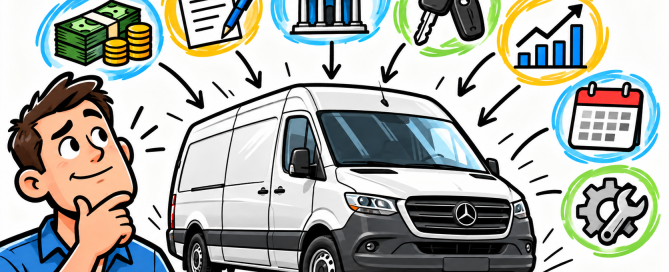
Compare the best ways to fund sprinter vans, from loans and leases to vendor programs, while protecting working capital and matching terms to use well.
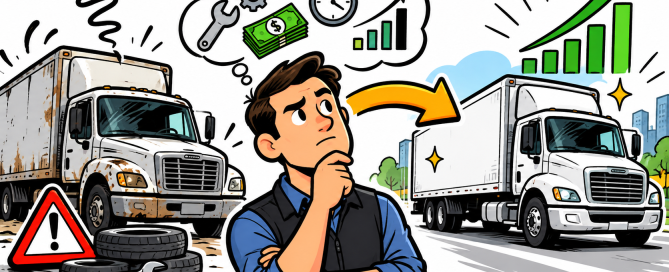
This commercial vehicle lifecycle guide helps fleet leaders plan purchases, maintenance, replacement, and financing around uptime, cash flow, and asset value.
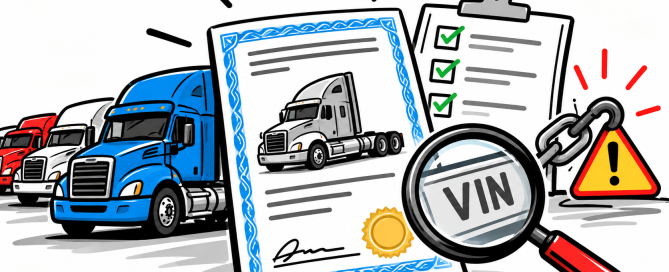
This commercial vehicle title guide explains liens, title transfers, VIN checks, and finance steps that help fleets put purchased equipment into service.
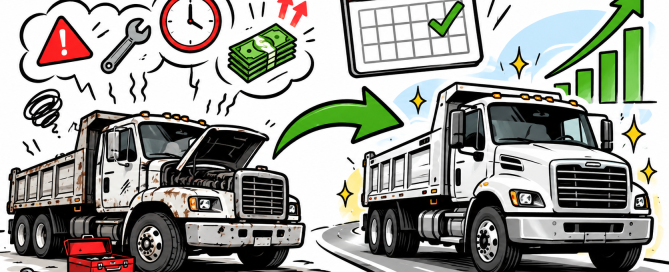
Fleet replacement trends are shifting toward uptime, lifecycle cost, and flexible financing. Learn how established businesses can plan asset upgrades.
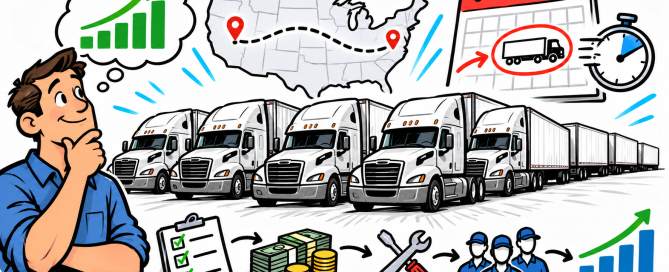
This fleet expansion case study shows how established businesses can structure truck financing, protect working capital, and put assets to work faster.